Sunday, December 12, 2010

Sites Index


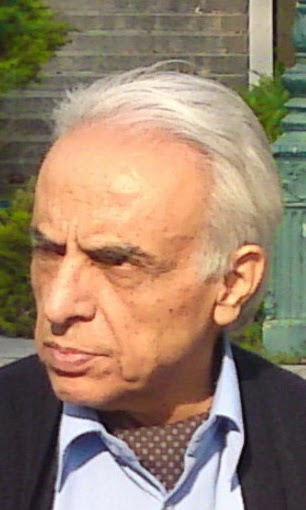
Ali Asghar Kazemi
Professor of International Law

Profile: English - Persian

_____________

Academic Sites

Strategic Discourse

Middle East Academic Forum

Pax Persica

Scholar e-Journal

e-mail

____________________

Most Recent Posts

By subjects and Dates

__________

Iran: Preparing for “Soft War”
Iran, Beating the War Drums!

* * *

Iran, US and the Russian Connection

Obama: Between Idealism and Realism

Towards "Secular Nationalism" in Iran

* * *

Iran: Islamization vs. Secularization

Iran, Islam, and Secular Social Sciences

Iran: Roots of the Post-Elections Crisis

Rise of New Nationalism in Iran

* * *

Strategic Implications of Nobel Peace Prize for Obama

Struggling in Two Fronts for Survival

Iran's National Security and the Nuclear Gamble

Iran's Post-Election Political Environment

Iran's Elections 2009: The End of peaceful democratic Reforms

* * *

Who should be the Next President in Iran
The Logic of War against Taliban and Talibanism
Iran: Elections and Political Apathy

* * *

Iran National Interests and Blind Radicalism

Prospects for Iran-US Negotiations

Iran: Reform vs. Revolution

Legality of ICC Action against Sudan President
Strategic Games in the Middle East
* * *
Dilemma of Iran's Next President
US Democrats are Pushing Iran to the Corner

Obama and a World of Expectations

Strategic Implications of the Gaza Conflict
* * *
Iran-US Relations: From Enmity to Rivalry
Barack Obama and Iran (After Election)
Crisis of Governance and new Generation of World Leaders

US Economic Crisis and the Middle East
* * *
Iran: Corruption Scandal and Political Campaign
Iran at a Critical Crossroads
Obama: On the Footsteps of the White House!
Iran: The New Parliament and the Nuclear Case
* * *

Message of the Preemptive Strike on Syria
Iran: Affluence amid Poverty
Iran's Selective Elections

* * *

Nuclear Delusion and Public Jubilation!
Iran's Revolution and Military in Politics
Iran: New Space Partner

* * *

NIE Report and Iran's Nuclear Challenge
The Global Context of Knowledge

Iran: Political Impact of the Cold

* * *

The Persian Hypocrisy(3)
Politics and Hypocrisy (2)
Politics and Hypocrisy (1)

* * *

Iran's Nuclear Crisis is not over
US Sanctions against Academics
Hope for Middle East Peace

* * *

Shadow of a new Cold War
Pax Persica Remembered
The Political Will of the Persian King

* * *

Diplomacy and Subversion: Iran-US Dialogue
Common Sense Strategy: US and the Middle East

Beyond Conventional Wisdom!
The Logic of Iran's Defiance

* * *

The New Cold War (3)
The New Cold War (2)
The Battleground of a New Cold War(1)

* * *

Bush's Agenda for Victory
Iran Facing UN Sanctions
Iran and U.S. Democrats
The Fate of a Dictator

______________________________________________

Previous Posts

______________

_____________


_____________

* The Guardian State (3)


____________

* Iran and the Nuclear Trap

* Religion, Politics and Terrorism
* The Persian Paradox and the West

___________

______________


Previous Posts

____________


Archives


Labels:

Sunday, December 06, 2009

Iran: Preparing for “Soft War”


Iran: Preparing for “Soft War”

Ali Asghar Kazemi

December 2009

_________________

Changing Conflict Environment

Ever since the breakdown of the Soviet Union, as the most powerful rival of the United States in the bipolar system, without a single bullet being fired, the expression of “Soft War” entered into new military and strategic jargon in the world. While the use of hard power or military forces is still a prevalent means in interstate clashes, the advent of the internet as a popular method of communications introduced a new dimension in the conflict environment.

Cyber war is a form of applied soft power in conflict situations where various vital strategic points and institutions of the target state are susceptible to cyber attacks. The range of such targets is very wide and diverse: from civilian power plants, banking system and defense establishments to media and cultural centers and academic institutions. Many states are now investing hard in the field of soft war as a legitimate investment with the objective to avoid the fate of the “evil empire.”

While conflict environment is being radically changed, means of encountering threats should also be transformed accordingly. However, there seem to be some misperceptions about non-violent and peaceful capacity of states to influence the course of international relations. This dimension has always been an important element of interstate interactions. In other words, use of soft power to complement other means of military power in peace and war has always formed an integral part of states’ grand strategy.

How far new schemes to cope with the threats of “soft war” is realistic? What are the risks of such strategy for society as a whole?

New Threats Perceptions

The post-elections turmoil in Iran has already lasted too long to be turned into an attrition domestic conflict. The hard-liners in Tehran are now announcing that they are facing a “soft war” initiated by the West for the purpose of toppling the Islamic regime. They argue that Western powers, disappointed from the threats of use force and hard power against Iran, and deterred from Iran’s defense and military capability, have been staging an unparalleled aggressive scheme through “soft power.” In their view, the plan is to instigate people against the government by claiming freedom, human rights, democracy and so on. They perceive that these latter demands are merely intended to press upon the Islamic system to surrender to western evil secular institutions and way of life.

The apprehension seems to be real and serious. Since, the forces of law and order are now being directed to cope with soft threats coming from the public media influenced by the West, including the satellites, internet and other means of communications. A parallel campaign has been initiated against academic institutions for teaching Western oriented secular social sciences. This whole has given a legitimate pretext to the ruling system to widen its rigorous control over the media and to press upon journalists, scholars, academics and opposition groups who one way or another have been criticizing the government during the past turbulent months.

Exaggerating Western Soft Power

There is no doubt about the technological capacity of the West and their capability to influence course of events anywhere in the world. But apparently, the threat of soft power is being immensely exaggerated in order to suppress domestic dissents which seeks its roots somewhere else

Ibne Khaldun, (1332-1406 AD) Moslem philosopher and scholar, pioneer in ‎sociology and historical analysis, was the first to argue that the defeat of the ‎Islamic domination in Western Mediterranean (Spain) was due to moral and ‎material decay of Moslem warriors and rulers. The main cause of this ‎phenomenon in his opinion was the clever plot designed by Westerners to corrupt ‎Moslem zealous through inducing lust for material amenities of life which detracted them ‎from their fervor and eagerness to defend the conquered realm of Islam.‎

In a way, the Khadunian suggestion seems to be still valid in any society where there is a cleavage between people and the ruling system because of mutual distrust. There are many factors through which people lose faith in their political system. Lack of accountability and proper democratic institutions, infringement to their principal rights, non-conformity to moral and ethical values, are among the most important factors leading to people mistrust and alienation. When people lose faith in the political system, they become discontent and thereby vulnerable and subject to all sorts of exogenous influence and intrigues.

Therefore, when people rise up against a political system and claim legitimate rights, one should not put all the blame on extraneous factors. Rational management of domestic crises requires that indigenous elements be taken seriously into consideration. In other words, we must first have an adequate grasp of our own society before initiating policies to counter with outside mischievous plots. People should be immunized against the influence of others’ soft power through appropriate cultural and educational preparation. Uses of repressive and restrictive measures usually have counterproductive effect. The problem needs to be tackled open-mindedly and rationally by specialists and not by unqualified forces that could jeopardize the whole scheme.

Dialogue and Diplomacy as Instruments of Soft Power

When states are engaged concurrently in two fronts (domestic and international) with disagreement, they should use both dialogue and diplomacy as instruments of soft power for crisis management. Exaggerating too much about “soft war” may further close the society and isolate the nation from the mainstream of international relations. At the same time, investing too heavily on hard power and military strength will not produce the necessary security assurance for a country.

The fall of the Soviet Union was not due to their lack of hard power, but rather to the disregard of the ruling elites of people’s essential rights and closure of the communist society to perceived “imperialistic plots.” Preparing for “soft war” requires a national consciousness of our strength, advantages and weakness and our standing in the global political configuration. Hard power and soft power are complementary components of national strategy in pursuit of vital interests. No matter how powerful a nation might be, it should show some degree of flexibility and tolerance in domestic and foreign affairs. The instruments of dialogue and diplomacy should be used as appropriate means to offset domestic unrest and to neutralize conceivable threats directed against our national interests. /

‎‎____________

‎ ‎* Ali Asghar Kazemi is professor of Law and International Relations in Tehran, Iran. See:www.aakazemi.blogspot.com

‎* Students, researchers, academic institutions, media or any party interested in using all or parts of ‎this article are welcomed to do so with the condition of giving full attribution to the author and ‎Strategic Discourse ©All Copy Rights Reserved.‎

Tuesday, November 24, 2009

Iran, Beating the War Drums!

Iran: Beating the War Drums!

Ali Asghar Kazemi

November 24, 2009

_______________

In the midst of a confusing stalemate in the nuclear negotiation with the 5+1 powers, Islamic hardliners are engaging in an unprecedented military exercise with the objective to show a deterrent air defense umbrella for Iran’s nuclear sites and strategic points. The Islamic government has so far shown reluctance to go along with the West on the matters concerning its nuclear undertaking and the proposed confidence-building measures. Instead, it is aggravating the situation by organizing maneuvers that would eventually create further suspicions and hostility.

How far the major challengers of the controversial projects are susceptible to be deterred from this and similar military exercises? Is really military confrontation a rational solution to the problem? What are eventual scenarios in this conflict? Is a military clash between Iran and its main nuclear contenders inevitable?

It is normal that countries plan in peacetime for regular military maneuvers in order to keep forces in a state of readiness and efficient condition to confront potential foreign threats. Also, it is quite understandable that such exercises be made known to public with a view to deter those who may have ill intentions about the security, independence and territorial integrity of another state. But, the odd thing about the recent air defense exercise in Iran is its timing and configuration.

At the outset, the exercise was supposed to cover almost the whole space of the country for the purpose of the air defense protection of nuclear sites and other strategic targets exposed to eventual hostile air raids. This has included both active as well as passive defense. But, one missing important element in this defense puzzle was the promised Russian S300 which so far was not delivered to Iran. Eventually, the lack of this vital weapon system pushed the Islamic Guard Corps- Pasdaran- to stay away from this particular operation. Since, without this air defense system, the chances for an effective active defense would be highly diminished. Understandably, Pasdaran, who are now in control of almost everything in the country, do not want to enter into a contest whose outcome is unclear.

Thus, unlike most other exercises, this time the regular military forces (and not the Pasdaran) have been tasked for carrying out operation. This is indeed a significant change from the past when the Guardian Corps assumed the responsibility of all show of forces in similar cases. In the central command post, a clergy with black turban and army uniform was sitting next to the commanding flag officer of the maneuver; implying that everything is under the control of the clerical hierarchy. It is interesting to notice that we seldom saw similar situations when a high profile “Pasdar” assumed the responsibility of an operation.

As for military and political implications of this untimely exercise, the following points can be observed:

· Considering the timing of this exercise, the Islamic government seems to be losing hope in diplomatic negotiations with the 5+1 powers and is trying to put more pressure to them for further concessions;

· Despite wide publicity in the domestic media, while public at large might be impressed by the extent and scope of the exercise, Iran’s potential hostiles, namely the United States and its ally in the region (Israel) appear not be deterred by the show of forces. Since, they have a practical estimate of Iran’s actual defense potentials and state of technology ;

· While a clash seems to be still remote under present circumstances, in an unfortunate worst case scenario, the conflict would be fast (blitzkrieg) and decisive leaving no option for Iran to project power beyond its borders;

· Should the worst case scenario occurs, the extent of damages to strategic points will be beyond calculation and the result of the last 50 years investment in infrastructure and economic resources will be put to nil.

· In case of a quick round up of the conflict, the blame of the defeat will be put on the regular armed forces and a number of outside factors beyond incumbent government control.

Given that the Islamic government has partially lost public support in the wake of the controversial presidential elections, it seems rather hard that the regime could mobilize a long-run attrition war against its enemies. This means that the ruling clergies might not be able to count on people’s religious or patriotic fervor for effective support. However, should the conflict drags on for more than a few days after the first rounds of strikes, then, Pasdaran might try to organize retaliatory brushfire strikes against the invaders or American allies in the region.

On the rationality and logic of Islamic hardliners to organize such costly exercises for the purpose of deterring their potential adversaries, one should realize that defending national interests of a country is no longer possible with mere hard power and weapon system. No matter how powerful a state might be, it needs to use diplomacy and negotiation for the purpose of protecting its security and sovereignty.

There is no doubt that the West and their allies in the region have a good grasp and assessment of Iran’s defense capacity and potentials. They know well its vulnerabilities and weak points as well as the technological state of its defense system. Hundreds of research centers and institutes permanently follow every bits of defense development or procurement in the world. Therefore, one ought to be realistic enough not to engage in a confrontation whose outcome is at least unclear if not totally adverse to its national interests.

Let’s hope that politicians involved in this critical situation act vigilantly in their decisions and actions. The Middle East has enough problems and bottlenecks that we need not another new situation that could engulf the whole region into a new crisis and bloodshed. /

_____________

Ali Asghar Kazemi is professor of Law and International Relations in Tehran, Iran. See: www.aakazemi.blogspot.com

* Students, researchers, academic institutions, media or any party interested in using all or parts of this article are welcomed to do so with the condition of giving full attribution to the author and Strategic Discourse. ©All Copy Rights Reserved.

Tuesday, November 17, 2009

Iran, US and the Russian Connection

Iran, US and the Russian Connection

Ali Asghar Kazemi

November 16, 2009

_________________

Iran and the United States have been competing hard to gain Russian support for their mutually antagonistic nuclear policies. Russians as usual are playing a villain opportunist who tries to get the most benefit out of this tripartite connection. How far this game can continue and how long Iranians should pay ransom to the Kremlin in order to put into operation Bushehr nuclear power plant that has become a source of prestige and the symbol Iran-Russia cooperation after the revolution in Iran?

Upon the conclusion of a meeting between Obama and Medvediev during the November 15, 2009 APEC conference in Singapore, Russian have announced that Iran’s nuclear power plant at Bushehr will not be operational at the end of this year for technical matters. This is the fifth or sixth time that Russians have postponed the inauguration of the plant during the past years; whilst it has become a matter of pride and prestige for the Islamic regime. Despite Russian claim to the contrary, Iranians firmly believe that this action has a political motivation and is a direct result of American pressure on the Russians with respect to Iran’s nuclear ambitions. Opposition groups blame the incumbent government for the mismanagement of the project and accuse Russians as unreliable and erratic party who should not be trusted for major undertakings.

Read More...

Saturday, November 14, 2009

Obama: Between Idealism and Realism

Obama: Between Idealism and Realism
Ali Asghar Kazemi
November 2009
______________________________
Less than a year in the White House, Obama is caught in a perplex situation: the Wilsonian ideals of peace, democracy, self-determination etc on the one hand; and American prestige, power and hegemony in the world on the other. There is no doubt that Obama is personally and by nature a decent man with many good human traits. But, as president of the United States, he is supposed to follow the Machiavellian advices in order to preserve “Prince’s” power and interests.
Perhaps, it is normal that when one begins to exercise in some fresh field, at initial steps the element of wish and purpose is overwhelming strong and the inclination to ponder upon facts and means are weak or non-existent. Realism is based on the assumption that the key concept in politics is interest defined as power; and everything else in the realm of ethics and morality is at the service of those interests.
Obama’s idealistic stand during his presidential campaign with respect to foreign policy and defense strategy was a natural position of a democrat candidate vis-a-vis a republican president who became the most detested leader in US history. But, he was enough conscious not to let him-self mired by illusion. Thus, in his initial speech after the election he touched to concrete facts on the way of the United States when he said: “the challenges that tomorrow will bring are the greatest of our lifetime, two wars, a planet in peril, the worst financial crisis in a century.” In fact, the troubles that Obama inherited from his predecessors were so profound and beyond reach that nobody could deny their existence and complexities.

Read More...

Tuesday, November 10, 2009

Towards “Secular Nationalism” in Iran

Towards “Secular Nationalism” in Iran

Ali Asghar Kazemi

November 2009

_______________________

While nationalism in the Moslem world is commonly considered as an alien ideology imported from the West, Persian nationalism has been emerged from a religious ground. Shi’ism is an outgrowth of this phenomenon that distinguishes Iranian from other Arab and non-Arab Moslems in the Middle East and elsewhere in the world.

Up until the advent of the Islamic regime in Iran, national consciousness has been with Iranians parallel to their religious traditions. In other words, religious nationalism formed an inherent trait of the Persian identity for a long period of time[i]. This feature helped Iranians to consolidate, fight against their enemies and secure the country from disintegration and collapse. However, this trend has changed its course during the past several years. A new generation of Iranian intellectuals, academics and educated people is gradually moving away from the political Islam and traditional religious values toward a more universal and secular approach to various issues of society and the nation.

The progressive “Green Movement,” that emerged amidst the controversial presidential elections of June 2009, can be considered as the social and political manifestations of this new tendency. Upon a series of bloody clashes with the regime during the post-elections turmoil of June 2009, the movement has turned to radical and secular nationalistic slogans that aim at the very foundation of the religious system.

What is the substance of this new nationalistic awareness? How far this movement is capable to pressure the regime for fundamental changes? What are the implications of changes for the domestic and foreign affairs of the nation?

Read More....


Sunday, November 01, 2009

Iran: Islamization vs. Secularization

Iran: Islamization vs. Secularization
Ali Asghar Kazemi
November 2009


__________________

Introduction
The controversial presidential elections of June 2009, which ignited a social crisis in Iran, had a definite impact on the society and truly polarized the nation in two antagonistic camps: pro-government conservative hard-liners on one side and reformist opposition groups on the other. At first the quarrel was limited to the results of the elections which were alleged to be performed with widespread frauds. Ruthless reaction of the government to peaceful manifestations of the unconvinced people pushed the opposition to take a much more radical stand against the whole Islamic regime. This prompted the religious leader to find about the cause and origin of this prolonged crisis which is still threatening the very foundation of the system.

Radical conservatives, while claiming foreign involvement in this turmoil, believe that the Islamization process should continue with much stronger vigor until the nation has converted to zealous followers and supporters of the religious regime. Reformists on the other hand contest that the crisis is a natural response of the people to years of repressive rule, deception and injustice. They express the opinion that as long as the country is under a backward system of government, democratic changes are almost impossible. They believe that Islam has limited capacity for transformation and adaptation to the needs of our time. Therefore, they suggest that secularization is an inevitable and necessary trend of the future of Iran.

Despite earnest attempts of the ruling regime in Iran to impose the strict law of Shari’a, as interpreted by the Shiite doctrine, the result was frustrating. Thus seemingly, the process of Islamization of all vital sectors of the society during the past three decades was quite unsuccessful. We have said that some political elites have singled out Western “social Sciences” taught at the higher education, as the main cause for this failure. Some others are still trying to put the blame on “Western imperialism” and enemies of Islam, who are incessantly conspiring to topple the Islamic regime.

To what extent these arguments hold true in present Iran? What are the main causes of the young generation distancing from Islamic traditional principles and leaning towards secular values? Why those who were brought up in the Islamic environment are now rising up against the ruling system and reject the Islamization process under the guise of what we may label “national secularism”? Read More....

Sunday, October 25, 2009

Iran, Islam, and Secular Social Sciences

Iran, Islam, and Secular Social Sciences
Ali Asghar Kazemi
October 2009

_________________

Introduction
In our previous commentary on the problem of Iran’s recent social turmoil after the presidential elections of June 12, 2009, we alluded to the issue of “Social Sciences” that has caused widespread alarm among conservative hard-liners.
In that article the emphasis was made essentially on the question of religion in general and Islam in particular as an ideological dynamic, influencing the function of society in the domain of human actions and interactions. It was argued that religion has to do with human mind, ideas, the belief system, values, attitudes, and behavior. While politics as an interdisciplinary branch of social sciences deals essentially with the pursuit of power and to some extent the distribution of values in society. Thus, the marriage of the two may inhibit man from his choice between the rational and the spiritual. This is indeed a major dilemma on the way of an ordinary citizen who wants to remain aloof of the impact of official creeds, unless he lets himself dragged by the formalistic rituals of the dominant religion. Read More...

Sunday, October 18, 2009

Iran: Roots of the Post-Elections Crisis

Iran: Roots of the Post-Elections Crisis
Ali Asghar Kazemi
October 2009

_____________

“A new world society is gradually emerging.
It is growing quietly, imperceptibly in the minds
and hearts of men. The tumult and the excitement,
the anger and the violence, the perplexity of spirit
and the ambiguities of expressing are the pangs of
the birth of something new. We of this generation
are called upon to work for this new order with all
the strength and capacity for suffering we possess.

S. Radhakrishnan[1]

______________

Introduction
Thirty years after the advent of the revolution, that brought an Islamic regime in Iran, religious leaders are still looking for ways and means to transform the society into a rigid bloc of faithful and zealous citizens who fully submit to the official principles and precepts put forward by them. While during the past three decades every effort has been made to disseminate religious teachings at all levels of public education, from the kindergartens to the universities, seemingly the result has been frustrating.
The post-presidential elections public turmoil, that brought the country to the brink of a real social revolution, was another vivid indication that the whole scheme of “Islamization” of the society was an ineffective and futile social investment. Since, the effort merely counter-produced and youngsters who were brought up with Islamic rigorous teachings after the revolution simply did not show interest to them and much less to obey them blindfolded. Indeed, this phenomenon should not surprise anybody who has a little familiarity with the very rudimentary concepts of the philosophy of education and social sciences.
More...

Sunday, October 11, 2009

Rise of New Nationalism in Iran

Rise of “New Nationalism” in Iran
Ali Asghar Kazemi
October 2009
_______________


The “Green Movement” that emerged in the midst of presidential campaign 2009 in Iran, gained momentum after the unconvinced defeat of reformist candidates and became a genuine and strong opposition front challenging the very foundation of the Islamic regime. The more the hardliners pressed upon the movement with the intention to wipe out once for all its driving force, the more it tended towards radical nationalistic slogans and acquired anti-regime propensity.
While the Islamic government does not mind the resurgence of the people’s nationalistic fervor upon which it could embark in case its survival is threatened by foreign threats, nonetheless, it seems determined to confront with all force the growing danger of the “Green Movement” to its internal security. Recent horrific clashes with masses protesting in the streets in the post-elections manifestations are vivid indication that the hard-liners would not allow the demonstrations for reform turn into a real revolution.
How far the Islamic regime is capable to contain the movement or benefit from the revival Iranian nationalism without being victim itself of this reawakening phenomenon? More...

Friday, October 09, 2009

Strategic Implications of Nobel Peace Prize for Obama

Strategic Implications of Nobel Peace Prize for Obama
A. A. Kazemi
October 10, 2009
_______
Whatever the true intention and justification behind the decision of the Committee of Nobel Peace Prize to give this prestigious award to Barack Obama, the event should be optimistically taken as a heavenly grace for peace and order in the Middle East in general and Iran in Particular. Though previous politician winners of the prize failed to achieve much in this respect, there is hope that at this critical point of time, when Iran is under increasing pressure and military threats from outside, President Obama would feel very reluctant to opt for a harsh and hostile strategy against the Islamic regime for its nuclear ambitions. More...

Friday, October 02, 2009

Struggling in Two Fronts for Survival


Struggling in Two Fronts for Survival

A. A. Kazemi
October 2, 2009

___________

Iranian hard-line conservatives are caught in an appalling stalemate in the post-election period. On the one hand, they are facing growing opposition at home in the wake of the unconvinced presidential elections that truly polarized the nation on the credibility and legitimacy of the new government. On the other hand, they are under increasing international pressure for their deceiving maneuvers on the question of nuclear activities. Recent revelations about new enrichment site came as an unambiguous indication that despite its recurrent negation, the Islamic regime is aimed at acceding to a nuclear power status.
Since the mass uprising of 1979 that ended up into the collapse of the monarchic regime, the events which followed the presidential elections of June 12, 2009 will be remembered as a new keystone in contemporary history of Iran. Threatened from abroad for its nuclear ambitions and vulnerable inside for its horrendous performance, the Islamic regime is helplessly fighting in two fronts for its survival.
How far the Islamic hard-liners are capable to carry on successfully the fight in two decisive battlegrounds? What are the plausible outcomes of this concurrent struggle in domestic and international fronts? More....

Sunday, September 27, 2009

Iran's National Security and the Nuclear Gamble

Iran’s National Security and the Nuclear Gamble
A. A. Kazemi

September 27, 2009
________________

Recent revelations by US president Obama about Iran’s new secret nuclear site in the vicinity of the religious city of Qom came as a new shock to the already soured relations of the Islamic regime with the West. The timing of this disclosure was quite cleverly calculated by Washington. This came while the United Nations General Assembly was in its regular yearly session and the newly reappointed Iranian president Ahmadinejad was visiting the United States, leaving behind the post-election crisis at home.
How far the new divulgation is susceptible to cause structural trouble for the Islamic Republic, which is now in its deepest political hurdle at home and lowest credibility at the international level? Can Iran continue to gamble on its nuclear undertaking and defy the upcoming fourth resolution on the agenda of the 5+1 powers for the UN Security Council? More...

Friday, September 25, 2009

Iran's Post-Election Political Environment

Iran’s Post- Election Political Environment
A. A. Kazemi
September 25, 2009
________________________________

« Il y’ a beaucoup de choses que ne valent pas la peine d’être dites, et il y’a beaucoup de gens qui ne valent pas que les autres choses leur soient dites, cela fait beaucoup de silence ! »

« There are many things that are not worthy to be said and there are many people whom are not worthy that the other things be said to them, this makes a lot of silence!”

___________

Silence is Gold

Indeed, “silence is gold” at a time when public uprising swabs intellectual discourse. The last time I published an article was exactly on June 13, 2009, just the day after the presidential elections in Iran. The comment was a short review on the amazing result of the election and its plausible consequence for the country afterward. The title of the article bears good witness that we had to expect something unusual after the announcement of the results: “ Iran’s Elections 2009: The End of Hope for Peaceful Democratic Reforms.” I don’t intend here to imply that I had foreseen the social commotion that followed the election, but it is fair to say that there was some truth in the conclusions of the comment about the astonishing results which could spark the long-accumulated revulsion about political repression in Iran. More...

Saturday, June 13, 2009

Iran's Elections 2009...

Iran’s Elections 2009:
The End of Hope for peaceful Democratic Reforms
Ali Asghar Kazemi
June 13, 2009
_________________________
Presidential elections of June 12, 2009 in Iran shall be remembered as the end of an era of democratic process toward political reform in a religious-revolutionary regime in Iran. Disregard of the outcome of the event, Iranians have been once again disheartened in their earnest attempt towards exercising their citizen rights in shaping their destiny for a brighter future.
What happened during the campaign for presidential elections in Iran which distinct it from the previous ones? What are the implications of this new trend for political development and democratic process in Iran? Who are the real winners and losers of this historic contest?

Read more

Tuesday, May 19, 2009

Who should be the Next President in Iran


Who should be the Next President in Iran?

Ali Asghar Kazemi

May 20, 2009

_______________

Almost three weeks away from the presidential elections in Iran, I have been asked by my students to give them some hints and advices regarding the most suitable candidate in the race. While I have my own personal views and preferences about the potential contenders, I feel very much reluctant to take side in public forum in favor of any of them at this particular point of time. Since, I believe, my duty as an academic is to shed light on the common traits of the would-be president in the present political and international environment of our country, rather than to speak in favor of any particular candidate.

In my previous comments regarding the presidential elections, I have listed a number of reasons for which people of various layers of the society may fell indifferent to participate in the process. Those considerations could still be valid as long as candidates do not explicitly clarify their positions with respect of a number of critical issues entailing the country and their concrete measures and policies to cure them. These issues encompass all sectors of the society including, social, economic, political, strategic, legal, environmental etc.

Of course, as I mentioned before, the president is not powerful enough to bring all the changes we might envisage. But, the least that he can achieve is to demonstrate his determination for change and to assure people of his resolve to cope with many socio-political malaises which inhibit the overall trend of the country towards democracy, human rights, justice and equity.

Here are some main points in my humble view to be considered in our choice of the next president for Iran: Read more

Friday, May 15, 2009

The Logic of War against Taliban and Talibanism

The Logic of War against Taliban and Talibanism
Ali Asghar Kazemi

May 15, 2009
____________________
Ever since September 11, 2009 events, Taliban and Talibanism have been chased and killed by masses, yet, they are still full of zeal and causing widespread troubles in Afghanistan and Pakistan. Recent Pakistani raids on their agglomerations on the initiative of the United States bring about a number of crucial problems about the rationality of Obama’s recent policy in this respect.
While I have no fond of these fanatical groups who fight with rudimentary means the most equipped and powerful forces representing the NATO, I have serious doubts about the logic of this protracted war and the humanitarian aspects involved therein.
In this short comment I venture to examine the flagrant flaws of American policy under Obama to open new fronts against Taliban in Pakistan with the objective of eradicating this movement, which supposedly is endangering the legitimate government of a nuclear power state. More...

Thursday, May 07, 2009

Iran: Election and Political Apathy

Iran: Elections and Political Apathy
Ali Asghar Kazemi
May 7, 2009

________________

Aristotle described man as “political animal” on the ground that human being is compelled to live in collectivities within the boundaries of a political system. But, people are by no means equally concerned with political life. In other words, some people are indifferent and others are more concerned with political matters. Among this latter group, only a few get deeply and passionately involved in pursuit of power.
In open societies with developed democratic institutions and popular governments, opportunities for political participation of citizens are available and people are encouraged to get actively involved in formulating their demands through parties and interest groups. On the contrary, in oligarchic societies, citizens tend to choose apathetic approach to political realm and become relatively inactive in deciding their socio-political fate.
Political apathy is usually regarded as a social malaise in developed societies. In countries where civil society is still lagging behind traditional and fatalistic customs, apathy is a way of life to avoid hazards of political stratum. In this case, it is merely a cure manifested as conscious decision to cope with authoritarianism, demagoguery and repression in societies where expressing political opinions and criticisms are considered beyond the realm of citizen rights... More

Thursday, April 23, 2009

Iran National Interests and Blind Radicalsm

Iran National Interests Victim of Blind Radicalism
Ali Asghar Kazemi
April 21, 2009

______________
Almost two months before the presidential elections in Iran, on April 20, 2009 president Ahmadinejad made another controversial speech at the UN Conference on Racism in Geneva (Durban II), creating further dismay about this country in world public opinion. While many observers were expecting some kind of softening in Iran’s position with respect to world critical issues at this juncture, the speech came as a cold shower to naïve wishful thinkers.
The unfortunate events that overshadowed the substance of the conference at its start, are now well known to all; since the show was covered live on many world TV’s. Besides Mr. Ahmadinejad direct allusion to Zionism and Israel, which prompted the mass walkout of European delegates from the conference room, he took on other critical issues such as racism, segregation and intolerance that nobody can logically deny the fact as indefensible plagues in many countries including Iran and the West. But, hearing such accusations from the mouth of a pompous character, whose intolerance takes regular victims even among his own entourage in the cabinet (let aside the critics and opposition groups) for expressing their views, is indeed very strange.
How much ideological drives are permitted to encroach upon national interests? Are these conflict-ridden statements intended to promote Iran’s national interests or to satisfy personal hatred of an obsessive individual who happens to assume the responsibility of a nation? ..More

Saturday, April 11, 2009

Strategic Games in the Middle East

Strategic Games in the Middle East

Ali Asghar Kazemi
March 5, 2009

______________________

On March 4, 2009 the Islamic Republic of Iran hosted a two-day international conference on Gaza and Israeli breach of humanitarian law and war crimes against Palestinians during the recent armed conflict between the two hostile parties. The conference took place after a similar meeting in Egypt backed by the United States for the reconstruction of Gaza Strip that endured severe material and human losses during the 22-day conflict. While the two conferences had more or less similar themes, they followed diverse objectives. The Gaza conflict can be visualized as a set of strategic games in which actors involved pursued different aims in the Middle East political arena.

How various actors perceive the games they are playing in the Middle East? What are the objectives, gains and losses pursued by rival states? What are the plausible outcome and implications of the games? More

Friday, April 10, 2009

Iran: Reform vs. Revolution


Iran: Reform vs. Revolution

Ali Asghar Kazemi

________________________________

“Men do not start revolutions in a sudden passion… Revolutions do not spring overnight. Revolutions come from the long suppression of human spirit. Revolutions come because men know that they have rights and they are disregarded.”

Woodrow Wilson*[1]

Revolution is an old concept in social theory. It has several distinctive indicators that make it different from other kinds of social events and political phenomena, such as coup d’état, rebellion and insurgency. The first and most obvious is that revolution has a large popular support. Secondly, it has a leadership who directs the movement and social forces. Finally, it aims at a redistribution of political power[2], although social, economic and cultural changes may not accompany this change. How can we explain revolutionary movements in our present international order? How much religious fervor in the Middle East is leading to revolution? Why people prefer revolution to reform? More


Prospects for Iran-US Negotiations


Prospects for Iran-US Negotiations

Ali Asghar Kazemi

April 9, 2009

________________________

Barrack Obama’s Nowruz message to Iranians and leaders of the Islamic regime leaves the impression that the new US president intends to demonstrate that he is sincere to put into action his presidential campaign promises with respect to Iran. He had pledged to open direct talks with Iran for the purpose of alleviating the mutual misperceptions accumulated during the past 30 years with the purpose of paving the path for normalization of relations through diplomacy. While the Iranian supreme leader did not reject categorically the offer in response, he nonetheless used harsh words to criticize the United States past policies and advised the new president to take real actions in order to prove his good intentions.

Assuming that the two parties are indeed ready to engage into some sort of talks and negotiations, before this could materialized two important questions should be clarified: first, how to negotiate; and second, what to negotiate? It seems that without resolving these essential problems any ushering of the talks would be doomed to failure. This short comment shall try to discuss briefly the matter as preliminary thoughts on the point. More

Friday, April 04, 2008

* Ali-Asghar Kazemi ( Profile)

cerebral palsy
cerebral palsy


Profile

Rear admiral ret. Iranian Navy. Professor of International Law and Politics, International Relations and Environmental Law.
Former professor at the National Defense University, Tehran -Iran.
Former Dean of the Graduate School of Law and Political Science, Islamic Azad Unversity ( Science and Research Branch ) Tehran-Iran.

Was Legal Advisor to the the Commander in Chief of the Iranian Navy and Iranian Foreign Ministry and Member of IranianDelegation to the UN Third Law of the Sea Conference (UNCLOS III), and UN Preparatory Commission for the Law of the Sea Tribunal.

Has been involved in Iran-Iraq peace talks, and was a member of the Cease-fire Committee and the Legal Committee in charge of War Damage Assessment.

He was Legal Advisor and Member of Iranian Delegation to the International Civil Aviation Organization (ICAO) for the Airbus incident (Montreal, Canada 1988).

He has participated in the Workshop on Compensation for Oil Pollution Damage, organized by the Marine Emergency Mutual Aid Center (MEMAC), an organ of the Regional Organization for the Protection of the Marine Environment (ROPME), in Bahrain, 1994.

He has written extensively on various legal, political, strategic and environmental aspects of the Persian Gulf. He is a winner of the 'Book of the Year Prize', Islamic Republic of Iran for his book titled :International Relations in Theory and Practice (1994).

He is also the winner of the first prize for research oriented to Iran-Iraq War for his book titled : Legal Dimensions of the Prospects for Peace Between Iran and Iraq,( 1999).
Medal of Knowledge for scholarly works before the revolution in 1974.
Dr. Kazemi is a graduate of The French Ecole du Commissariat de la Marine Nationale. Holds M.S. in Management Science from the United States Naval Post-Graduate School, Monterey, California(1971). He also holds M.A., M.A.L.D., and Ph.D. from the Fletcher School of Law and Diplomacy, Tufts University, Medford,Massachusetts.(1976-1979).
Professor Kazemi has been Legal Counsel representing the Islamic Republic of Iran's claim to the United Nations Compensation Commission (UNCC) for environmental damages caused by Iraqi aggression against Kuwait in 1991.The case is now under consideration by the expert panels of the UNCC in Geneva-Switzerland.

The Following is a List of Books in Persian

By : Ali-Asghar Kazemi

1. Modern Diplomacy in an age of Revolution in International Relations ,Tehran: Institute for Political and International Studies(IPIS), 1985. Bibliograhy,Index.

2. International Crises Management, Tehran : Institute for Political and International Studies (IPIS) , 1986. Bib.,Index.

3. The Role of Power in Society and International Relations , Tehran : Ghomes Publisher, 1988 . Bib., Index.

4. Legal Dimensions of Iran's Sovereinty in the Persian Gulf. Tehran: Institute for Political and International Studies(IPIS), 1988, 1991, 1993.Bib.,Index.

5. Integration Theory in International Relations , Tehran: Ghomes Publisher, 1988. Bibliography, Index.

6. International Relations in Theory and Practice, Tehran: Ghomes Publisher, 1993, 1995,1998.Bibliography ,Index. ( Winner of the Book of the Year Prize, 1994)

7. The Crises of Modernity and Political Culture in Contemporary Iran, Tehran : Ghomes Publisher, 1996. Bibliography, Index.
( See Powerpoint short presentation of this book)

8. Ethics and Politics: Political Thoughts in Praxis , Tehran: Ghomes Publisher, 1996. Bibliography , Index.

9. Method and Insight in Politics, ( A Philosophical , Scientific and Methodological Approach) , Tehran: Institute for Political and International Studies
(IPIS), 1995. Bib.,Index.

10. Politimetrics: Quantitative Methods in Politics and International Relations, Tehran: IPIS. 1995. Bib. ,Index.

11. Legal Dimensions of the Prospects for Peace between Iran and Iraq, Tehran, Islamic Cultural Propagation Publishing Co. 1998. (First Prize Winner of the 8th Anniversary of the Iran-Iraq War. 2000) . Bib., Index.
12. Linkage politics and International Relations, Tehran, Ghomes Publishing Co., 1991, Bib., Index.

13. The Crisis Of Modern Society , Moral and Cultural Decline of Modernity, Tehran : Islamcpo Publishing Co. 1999. Bib., Index.

14. Public Policy and Political Management, Tehran : Islamcpo Publishing Co. 2000 .Bibliography , Index.
15. The Seven Pillars of Politics , Tehran: Islamcpo Publishing Co. 2000. Bib., Index.

16. Globalization of Culture and Politics, A Critical and EpistemologicalAnalysis. Tehran : Ghoomes Publishing Co. 2001. pp.335 + Bib. + Index.

17. The End of Politics and the Last Myth : Critical Order in the Post-Political 21st Century. Tehran : Ghoomes Publishing Co. 2001.


List of Selected Articles in Persian
The Following is a List of more recent Articles in Persian, published in Iranian Journals


1- "The United Nations Organization and the New World Order,"in : Iranian Journal of Strategic and Defense Studies , National Defense University, Tehran, 1999.
2- "Idealism and Realism in Foreign Policy," in Iranian Journal of Foreign Policy,No4(11),1998 3- "Coceptualization about Culture and Civilization," in Political and Economic Journal ( Ettela 'at) , No.141-142, 2000.Please refer to the "File"
4- "The Distorted Knowledge: Reflection on the 20th Century Political Thought," in Political and Economic Journal ( Ettela'at) No.133-134, 1998.
5-" Method and Insight in Political Theory," Political and Economic Journal ( Ettela'at) No. 121-122, 1998.
7- "A Journey to Tajikestan," Central Asia and the Caucasus Review, No. 16. 1996 , The Foreign Ministry of the Islamic Republic of Iran.
8- " A Critical Analysis of Political Methodology," Political and Economic Journal (Ettela'at) , No.113-114. 1996.
9-" Theory of Surplus Value in Cultural Exchange Among Nations," Political and Economic Journal (Ettela'at) No.99-100. 1995.
10- " The United Nations Organizations at the Threshold of the 21st Century," Iranian Journal of Foreign Policy. No.1( 14), 2000.
11- " Civil Consciouseness and Civil Society," Collected Papers of the Seminar on Civil Society, Ministrry of Culture ,Tehran, Iran. 1997.
12- " The End of Politics and the Last Myth : Critical Order in the World of 21st Century" Political and Economic Journal ( Ettela'at), No.161-162. Winter ,2001.
13- " Ethical Foundations of Republican State," Collected Papers of the Seminar on Republic.., Ministry of Culture , Thran, Iran. 1998.
14-" Theory of Cultural Exchange and the Dialogue Between Civilizations," Collected Papers of the Seminar of The Dialogue of Civilizations, Minstry of Culture , Tehran , Iran.1999.
.15-"The Post-Political Condition".. in Political and Economic Journal ( Ettela'at), No. 163-164. Spring , 2001. . See File in Persian. . . . . . .


... . . . . . . . . .


Monographs and Articles in English


1-" Environmental Damage Assessment and Loss Valuation : Criteria and Techniques". 1998 . Prepared for the Environmental Claim of Iran Presented to the United Nations Compensation Commission UNCC. 1999. To see the new edition of the text click here to Download the File No.1.

2- "Legal Basis of Iraq's International Responsibility for Compensation, with Respect to Damage Caused to the Environment During its Aggression Against and Occupation of Kuwait.1990.-1991. Environmental Claim....1999. To see the text click here to download the File No.2.
3-"Environmental Setting of Iran Before and After the Persian Gulf War." Environmental Claim... 1999.New edition, Spring , 2001. To see the new edition of theText click here to download the File No.3.

4-"Aggression Related Damage to Iran's Environment and Natural Resources: The Case of
Iraq-Kuwait War of 1990-1991," Environmental Claim......1997. New Edition Spring 2001.. To see the Text click here todownload the File No.4.

5-Religion and Politics: In Search of Compatibility and Compromise - With Special Reference to Islam and Iran . ( Monograph ) 1986

6-" Peace Through Deception : The Iran-Iraq Correspodence," in Farhang Rajaee, Iranian Perspectives on the Iran-Iraq War.. University Press of Florida, 1997. ISBN 0-8130-1476-X.
http://www.upf.com/Spring1997/rajaee.html

7-"Development and the Issue of Transit: The Case of Land-locked States of Central Asia
and Caucasia " Iranian Journal of Foreign Policy, !994

8- Iran's Maritime Strategy inthe Persian Gulf, Monograph ,1978.

9- Toward a Regional Sea Concept in a New Maritime Environment: Problems, Pospects and Implications for International Relations. Ph.D. Dissertation, The Fletcher School of law and Diplomacy, Medford , Massachussetts,1978.http://www.library.tufts.edu/ginn/los.htm

10-" The Issue of Neutrality in Contemporary International Armed Conflicts" .( Monograph-1987)
. . . . . . . . . . . .

. . . .

Monographs in Persian


1- The Law of War and Neutrality at Sea , Tehran, 1972, Revised in1982, pp. 350

2- The Sea in International Relations, Tehran, 1973, Revised in 1983, pp. 400.

3- War and International Trade at Sea., Tehran , 1973. Revised in 1982. pp. 360 .

4- The Law of Environment, Tehran, 1985.

5- Collected Papers and Short Articles [on Strategy, Persian Gulf War and International Relations ] (1979-1987), Three Volumes.

6- Collected Literary Works ( 1962-1976) Three Volumes.

7- International Law of the Sea, Collected Reports of the United Nations Third Law of the
Sea Conference, Ministery of Foreign Affairs ,Tehran , Iran.1974-1983.


Current Academic Function

Former Dean of the The Graduate School of Law and Political Science, Research and Science Campus of the Islamic Azad University, March 2003- September 2005. Currently professor of internationmal Law and International Relations.


Books

Currently I have two books under publication by Ghoomes Publishing Co. in Tehran .The first is Globalization of Culture and politics . . . . . and the second is the most controversial work I have ever done , that is : The End of Politics and the Last Myth : Critical Order in the Post -Political 21st Century . Both books cover issues and problems of our time, viewed from a critical and epistemological perspective. I hope the first one will come out of print before the beginning of the next academic year in September 2001. The second book shall eventually come out not later than next December.
Currently , I am working on a new book related to an important subject of Public International Law. The writing of the main body of the book is already finished. I am in the process
of checking the content and citations. I hope to get it published during the next Iranian year.

Articles


I have published two articles recently , both dealing with the much
disputed theory of " The End of Politics . . . " In fact, they have been taken
from the aforementioned book : The End of Politics. . . Another article in the same series will be published very soon by the same Journal i.e. Political and Economic Ettela'at in Tehran -Iran. For more recent papers in english see this site Documents


Courses


Next fall I will be teaching the following courses at
Ph.D. Level :
- Methodology in Political Science
- The Law of War and Neutrality
- Crisis Mangement
- Political Institutuions and Public Policy


Seminars

I have presented a paper in a Seminar organized by the Iranian Ministry of Foreign Affairs, School of International Relations on the occasion of the Centennial of Diplomatic Training in Iran. The paper is titled : " Diplomacy, Ethics and National Interests."
On March 4th.2003 I have delivered a speech on the subject " Strategic Ambiguity in
Confronting with Crisis of Iraq,"inThe 13th International Conference on the Persian Gulf :
"The Persian Gulf in the Light of Global Changes & Regional Developments."
I have prepared a paper on "The Legality of U.S. Armed Interventions and Prospects for Peace and Democracy in the Middle East," which was presented to the Regional Security Conference this coming August 2003 in Athens ,Greece.(Text)
A second short paper was presented to Persian Gulf Security Group during the same conference in Athens: "The Future of the Persian Gulf Security in the Light of Recent U.S. Armed
Intervention in Iraq" (Text)


Miscellaneous

It was revealed very recently through the United Nations media network that a total amount of $ 17 million was allocated to the Governmental bodies of the Islamic Republic of Iran ( Including the Ministry of Jihad . . . ) , as a partial and peripheral amount claimed by this
latter for the purpose of undertaking a number of monitoring research
projects for the evaluation of damage caused to maritime and terrestrial
environment of Iran during and after the Iraqi aggression against Kuwait
in 1990-1991. For a detail account of the case , please refer to the appropriate files, in this Site.
It is worthwhile to note that nothing in this respect has been so far
brought to the attention of interested parties through official channels of the
Iranian Ministry of Foreign Affairs , who is in charge of pursuing the case
through the United Nations Compensation Commission ( UNCC ) in Geneva,
Switzerland.


Tuesday, May 09, 2006

A Letter to the "Great Satan"

A Letter to “The Great Satan”

Ali-Asghar Kazemi
May 9, 2006
________________________________________________________________________


Not long ago, during the peak of heated debates over the nuclear issue and while the case was on the way to the U.N. Security Council, it was revealed by U.S. media that Americans are aiming at “regime change” in Iran. Many peoples were quite anxious that Iran’s intransigence on nuclear enrichment could finally unleash an armed conflict in the region. Two years ago I argued that chances for a clash between the two states are very slim for quite different reasons. More recently I wrote in a short paper “When….the survival is at stake, everything is permissible, since ends justify means. This is to say that principles can be sacrificed when the issue reduces to this simple question: To be or not to be?”( ...More)

Monday, April 17, 2006

Euphorie Nucléaire de l'Iran

Euphorie Nucléaire de l'Iran

Vers une Confrontation avec l'Occident!

Ali-Asghar Kazemi[*]

12 Avril 2006

___________________________________________________

Les Iraniens ont beaucoup d’étapes dans leur longue histoire. En fait, l'histoire de l'Iran est pleine des étapes importantes, des héros et des idoles qui ont aidé à sauver cette nation dans les vicissitudes des temps passés. Les Persans doivent leur survie dans l'histoire à ce don merveilleux. Beaucoup d'occurrences telles que la "nationalisation du pétrole," la révolution islamique, et la fin de guerre entre l'Iran et l’Irak, sont parmi les événements plus récents qui sont considérés en tant que tournants en Iran contemporain.

L’étape contestable la plus récente est le prétendu plein accès à l'enrichissement en carburant nucléaire qui a été déclaré avril 11, 2006. Ceci s'est produit à un temps critique au milieu la crise nucléaire, alors que le monde compte en bas les jours de délai accordes par le Conseil de Sécurité de l’ONU au gouvernement islamique pour stopper toutes ses activités nucléaires. En ce jour, le président controversé de dur ligne a solennellement annoncé que l'Iran à acquérir la capacité de l'enrichissement nucléaire sur l'échelle industrielle et a déclaré la date comme "jour national de fierté et prestige."

Le public moyen cependant, impatient au sujet des impacts plausibles de l'événement sur leur vie quotidienne, a montrés peu d'enthousiasme pour les nouvelles. Des citoyens plus instruits et plus expérimentés ont secoué leurs têtes et ont tranquillement exprimé des inquiétudes concernant les conséquences graves de l'entreprise. Les groupes d'opposition, étonnes par la charge lourde d'avertis la couverture médiatique et la propagande, ont exprimés leur mécontentement au sujet de l'effet néfaste du jeu sur les intérêts nationaux de l'Iran.

Il y’à beaucoup de doutes que cet événement pourrait être considéré comme borne limite et être classé comme percée dans des possibilités scientifiques du pays. On croit que la déclaration était une manoeuvre délibérée afin d'atteindre un certain nombre d'objectifs en ce moment critique: a) la consommation domestique pour ceux qui deviennent de plus en plus frustré au sujet de la réalisation du président de ses promesses de faire face à la pauvreté, à la corruption, aux inflations et à d'autres maux sociaux; b) pour encourager le directeur général de l'AIEA (attendu visiter l'Iran en 12 avril ) pour noter son rapport sur le cas de l'Iran au Conseil de Sécurité en quelque sorte pour éviter des sanctions certaines sous chapitre VII (article 41) de Charter l’ONU.; c) pour envoyer un message sombre à l’ONU le et les membres permanents du Conseil de Sécurité que dorénavant elles font face à un fait accompli et devraient faire attention en faisant face à l'Iran nucléaire. Pas étonnamment, sur l'annonce de cette déclaration, tous les membres permanents du Conseil de Sécurité ont pris garde et ont averti l'Iran au sujet des conséquences négatives du fait.

Seulement quelques heures après la déclaration, le prix du pétrole sur le marché international et le prix de l'or et du dollar dans des transactions domestiques ont sauté à un nouveau haut record. Les observateurs politiques croient qu'en réalité la fin de la commande réformiste dans le gouvernement iranien devrait être considérée comme borne limite importante dans la mesure où le destin politique de l'Iran et sa place dans la scène internationale sont concernées. En effet, pendant l’ autorité des progressive dans les branches exécutives et législatives du gouvernement, l'Iran à pu survivre au-dessus de beaucoup de menaces et calamités qui pourraient mettre en danger l'existence même du régime islamique. L'ouest et le monde en général ont espéré que la tendance mènerait finalement à la société civile d'épanouissement et aux établissements démocratiques qui laisseraient des idées obsédantes et fondamentalistes. Mais, l'apparition du nouveau conservateur président de dure ligne était un coup sérieux aux idéaux progressif qui a tourné les rêves doux des naïves au cauchemar.

Dans le camp des Etats Unies aussi, les Hawks néo--conservateurs semblent être déterminés pour contenir les ambitions nucléaires de l'Iran, qu'ils ont pensées pour être une menace sérieuse à l'ordre du monde. En fait, la déclaration provocatrice récente sur le plein cycle d'enrichissement est susceptible pour lâcher une vraie confrontation entre les deux camps conservateurs. En outre, le défit de l'Iran du rapport du Conseil de Sécurité et de l'infraction réclamée l'accord de Paris avec EU3 aussi bien que le protocole additionnel au NPT, pourraient préparer le terrain pour que les Américains convainquent la Russie et la Chine qu'un règlement politique n'est pas possible et elles devraient atteindre un consensus sur une résolution grave sous le chapitre VII de la Charte de l’ONU.

Peut-être maintenant les Etats-Unis ont une évidence et une justification plus persuasive pour pousser des membres du Conseil de Sécurité pour entreprendre des actions sérieuses contre l'Iran. Les Américains ont averti que s'ils n'obtiennent pas une résolution forte ils pourraient essayer de former une coalition séparée pour faire face aux menaces de l'Iran. Ainsi, il semble que si les deux adversaires conservateurs ne sont pas contenus par un certain genre de médiation ou de négociation directe, la situation pourrait escalader et mener au désastre.

Pour les raisons pratiques cependant, les chefs iraniens ne semblent pas s'inquiéter beaucoup d'un embargo certain ou des sanctions économique, bien que ceci sûrement cause un bon nombre d'ennui et de dérangement à la nation entière. Mais, ceux qui souhaitent par la suite que le peuple révolte contre le régime islamique en cas de blocus économique devraient se rappeler que depuis la révolution, ce pays a été sujet à des toutes sortes de sanctions pendant la guerre de l'Irak et Iran et après, et aucune telle chose s'est jamais produits. Au contraire, Iraniens ont prouvé qu'ils ont une tendance à consolider pendant les périodes difficiles.

En ce qui concerne les frappes de préemption sur les installations nucléaires de l'Iran ou les installations pétrolifères sur la terre ou en mer, directement par les Etats-Unis ou par l'Israël, il y’à peu de chances que ces opérations pourraient produire les résultats prévus. Ceci peut seulement produire des résultats contradictoires: réveille le nationalisme iranien en consolidant la nation contre l'invasion étrangère, ou donne un dessus au régime islamique pour augmenter plus loin sa poignée domestique.


Le gouvernement islamique a réclamé dans plusieurs occasions que s'il perçoit une vraie menace dans le golfe Persique ou ailleurs sur son territoire, il a la capacité de rendre la région entière dangereuse pour tous. L'exercice naval récent en golfe Persique, détroit de Hormoz et mer d'Oman, où un certain nombre de nouvelles armes ont été examinées, était organise' assurément pour envoyer le signal que l'Iran peut engager dans une série d'opérations peu usuelles qui pourraient décourager et intimider tous les adversaires potentiels. En fait, l'Iran a déjà montré à d'autres occasions, (en Afghanistan, en Irak, au Liban et en Palestine) qu’elle est capable pour frustrer la stratégie ou les actions des Etats Unies dans toute la région.

Si l'euphorie nucléaire de l'Iran a n'importe quelle justification raisonnable autre que l'agitation et l'irritation autour du monde et si les actions intrépides et provocatrices récentes pourraient décourager l'ouest ou il peuvent aboutir au désastre, nous n'avons aucun autre choix que d’attendre et voir comment les politiciens compétents contrôleront sagement la crise imminente.

_______________________________


[*] Professor of International Relations and Politics. See: www.akazemi.homestead.com

Thursday, April 13, 2006

Iran's Nuclear Euphoria...

Iran’s Nuclear Euphoria
Heading for a Clash with the West!

Ali-Asghar Kazemi
12 April 2006

_______________________________________________________________________


Iranians have many landmarks in their long history. In fact, Iran’s history is full of milestones, heroes and idols that helped to save this nation through the vicissitude of times. Persians owe their survival in history to this marvelous gift. Many occurrences such as “oil nationalization,” Islamic revolution, termination of Iran-Iraq war, are among the more recent events which are considered as turning points in contemporary Iran.

The most recent disputable landmark is the so-called full access to nuclear fuel enrichment which was declared on April 11, 2006. This happened at a critical time amid the nuclear crisis, while the world is counting down the time limit set by the U.N. Security Council to the Islamic government to halt all its nuclear activities. On that day, the controversial hard-line president solemnly announced Iran’s enrichment capability on industrial scale and declared the date as a “national day of pride and prestige.”

Average public however, anxious about the plausible impacts of the event on their daily life, showed little enthusiasm about the news. More educated and experienced citizens shook their heads and quietly expressed concerns about the grave consequences of the venture. Opposition groups, surprised by the heavy load of media coverage and propaganda, voiced their discontent and warned about the detrimental effect of the gamble on Iran’s national interests.

Whether the event could be considered as a landmark and be filed as a breakthrough in scientific capability of the country, is subject to doubt. It is believed that the declaration was a deliberate maneuver for the purpose of achieving a number of objectives at this point of time: a) domestic consumption for those who are becoming increasingly frustrated about the president’s fulfillment of his promises to cope with poverty, corruption, inflations and other social evils; b) to encourage the IAEA Director General (expected to visit Iran on April 12) to write down his report on Iran’s case to the Security Council in a manner to avoid eventual sanctions under Chapter VII (Article 41) of the U.N. Charter; c) to send a somber message to the U.N. Security Council and its permanent members that henceforth they are facing a fait accompli and should be careful in dealing with nuclear Iran.

Not surprisingly, upon the announcement of this declaration, all permanent members of the Security Council condemned the action and warned Iran about the negative consequences of the deed. Hours after the declaration, oil price in international market and the price of gold and dollar in domestic transactions jumped to a new record high.

Political observers believe that in reality the end of reformist control in the Iranian government should be considered as an important landmark as far as Iran’s political fate and position in the international scene are concerned. Indeed, during the progressive rule in the executive and legislative branches of the government, Iran was able to prevail over many threats and calamities that could endanger the very existence of the Islamic regime. The West and the world in general hoped that the trend would ultimately lead to flourishing civil society and democratic institutions that would leave behind obsessive and fundamentalist ideas. But, the emergence of the new hard-line president was a serious blow to the progressive ideals that turned naives’ sweet dreams to nightmare.

In the US camp too, the neo-conservative hawks seem to be determined to contain Iran’s nuclear ambitions, which they believed to be a serious threat to world order. In fact, the recent provocative declaration on the full enrichment cycle is susceptible to unleash a clash between the two conservative camps. Furthermore, Iran’s defiance of the Security Council Statement and the claimed breach of Paris Accord with EU3 as well as the Additional Protocol to the NPT, could pave the way for Americans to convince Russia and China that a political settlement is not possible and they should reach a consensus on a severe resolution under Chapter VII of the Charter. Perhaps now the United States has more persuasive evidence and justification to push members of the Security Council to undertake serious actions against Iran. Americans have warned that if they fail to get a strong resolution they might endeavor to form a separate coalition to face Iran’s threats. Thus, it seems that if the two conservative opponents are not contained through some kind of mediation or direct negotiation, the situation could escalate and lead to disaster.

On practical grounds however, Iranian leaders do not seem to worry much about an eventual embargo or economic sanctions, though this surely will cause lots of trouble and inconvenience to the overall nation. But, those who eventually wish that the people would revolt against the Islamic regime in case of an economic blockade should remember that ever since the revolution, this country has been subject to all kinds of sanctions both during Iraq-Iran war and after, and no such thing has ever happened. On the contrary, Iranians have shown that they have a tendency to consolidate during the hard times.
With respect to an eventual preemptive strikes either on Iran’s nuclear facilities or oil installations on land or offshore, directly by the United States or through Israel, there is little chances that these operations could produce the expected outcome. This may only generate contradictory results: either awakens Iranian nationalism by consolidating people against foreign invasion, or gives an upper hand to the Islamic regime to further expand its domestic grip.
The Islamic government has claimed in several occasions that if it perceives a real threat in the Persian Gulf or elsewhere on its land territory, it has the capacity to make the whole region insecure for all. Recent naval exercise in the Persian Gulf, the Strait of Hormoz and Sea of Oman, where a number of new weapons were tested, was undoubtedly organize to send the signal that Iran can engage in a series of unconventional operations that could deter and intimidate any potential opponents. In fact, Iran has already shown on other occasions, (in Afghanistan, Iraq, Lebanon and Palestine) that it is capable to frustrate U.S. strategy or actions throughout the region.
Whether Iran’s nuclear euphoria has any rational justification other than stirring up irritation around the world and whether recent bold and provocative actions could deter the West or it may end up to disaster, we have no other choice than to wait and see how competent politicians will wisely manage the impending crisis./
___________________________

Saturday, April 08, 2006

Iran's Mixed Signals to the West

Strategy of Asymmetric War
Iran’s Mixed Signals to the West

Ali-Asghar Kazemi[*]
7 April 2006
________________________________________________________________________


While the count-down of the remaining 30 days for Iran to comply with the demand of the United Nations Security Council to halt its nuclear activities has started, the Islamic regime has been giving mixed signals to the international community. On the one hand Iranians took a conciliatory and cooperative stance urging the Western powers to continue their negotiating efforts within the IAEA for the benefit of world peace and order, and on the other hand they embarked on a bold and confrontational venture in the Persian Gulf.

A major naval exercise was carried in this strategic region, including the Straits of Hormoz and the Sea of Oman, where an assortment of new weapon were brought into play. Among these, a new version of ballistic missiles (Shehab III) with multiple warhead or MIRV (Multiple Independently targeted Reentry Vehicle) capability and a very high speed torpedo, both of which claimed to have radar and sonar hidden ability. A number of other new weapons and platforms of rather offensive character were also demonstrated in the week-long maneuver.

The media coverage of the exercise was rather unprecedented, leaving the impression that the Islamic hawks intended to send a strong message to the West, especially the United States, that they must think twice before deciding to pass a harsh resolution against Iran in the Security Council or threaten the survival of the revolutionary regime. In fact, the defense doctrine of the Islamic Republic is based on a Qur’anic verse that commands the Moslems to acquire all sorts of weapons and equipments they can afford in order to deter and scare their opponents and the enemies God. Not surprisingly, this canon is coined as the symbol of the Revolutionary Guards and appears as an emblem on their flag and as a badge on their military uniform.

One important aspect of this exercise which eventually escaped the eyes of observers was the almost total absence of the regular Iranian navy whose functions are normally limited to classical tasks of sea denial and power projection ashore in the Persian Gulf and the Straits of Hormoz. We know by experience that in a purely classical naval engagement the Iranian navy would not be able to sustain combat capability and will soon be out of effective operation. That was the case in the late 1980s where Iranian navy lost some of its warships in an unequal interface with the American units.

That experience led the defense planners to devise new tactics with limited but effective light and fast units to hit and run, which was initially termed as “guerilla warfare at sea.” In fact, like operations on land, when two unequal opponents face each other, the best way for the weak side is to recourse to war of attrition and guerilla operations. In an enclosed narrow and rather shallow region such as the Persian Gulf, this tactic can be very decisive against large units and can deny the enemy from effective deployment, sea lines of communication and power projection.

Thus, the rationale behind the April 2006 Iranian joint forces maneuver in the Persian Gulf should be found in the strategy of “asymmetric warfare” carried by the Revolutionary Guards with the objective to deter the Americans from risking any adventurous plan to ultimately topple the Islamic regime as they did in neighboring Afghanistan and Iraq. At the same time Iran is taking up other long-term strategy in the region which relates to confidence building and gradual rapprochement with the Persian Gulf littoral states pursing the following objectives:

- Inhibiting more and more the U.S. presence in the region of the Persian Gulf;
- Making the future American interventions in the region much more difficult and costly;
- Building an anti-American shield against the United States policy of “forceful democratization” in the region;
- Narrowing down the gap between the Iranian regime and the conservative Arab States;
- Encouraging the Persian Gulf States toward Asian markets and other world great powers, such as Russia, China, India and Japan, while limiting economic interaction with the U.S.;
- Making the strategic environment much more difficult for the United States force deployment in crisis situations.

All these would suggest that it would indeed be hard for the United States to bear the consequences of a serious entanglement with Iran in the near future, unless the American policy with respect to Iran and the Persian Gulf changes its contents and context. That is to say, the American objectives and therefore ways and means to reach them should be adapted to the new emerging environment. The new environment is not necessarily in favor of the American military presence in the region. It is not however quite certain that Iran’s hostile signals during the April 2006 exercise would deter in any way the neo-conservative hawks in Washington who are leaning toward the use of hard power to achieve their objectives.

However, we should recognize that there is a major difference between “force” and “power.” A nation may have one but not the other, since for example, sea force is only one of the many composing elements of sea power. Geographic position, indigenous technological base, industrial productive capacity, scientific potentialities, strong communication and economy, wisdom of leadership and above all domestic and international supports are among other prerequisites of power. Failure to comprehend these principles together may lead a nation to the “illusion of power” and consequently to risky situations which could jeopardize the vital interests of a nation.

Whether the Islamic regime will surrender to the demand of the U.N. Security Council in order to avoid further escalation of the nuclear issue, is a matter of threat perception of the Iranian decision makers and their capacity to manage the crisis. Indeed, if they realize that the risks of defying the U. N. demands are much too high and beyond their endurance, they will surely come to their sense and do whatever necessary to avoid the worst to happen./

___________________________


[*] Professor of International Relations. For detail see: www.aakazemi.blogspot.com

Monday, March 20, 2006

Iran: The Moment of Truth

Iran: The Moment of Truth
Ali-Asghar Kazemi
March 17, 2006

____________________________________________________________________________


When one is guided by mere force of dogma or instinct and not reason, and the survival is at stake, everything is permissible, since ends justify means. This is to say that principles can be sacrificed when the issue reduces to this simple question: To be or not to be?

Twenty seven years after the coming into power of a regime which started its religious reign with the hostage taking of the American diplomats for 444 days, the revolutionary Iran is now facing the crude realities of the rules of the game in world politics. Iran’s nuclear case has been referred to the U.N. Security Council and is awaiting a crucial decision which will eventually decide the fate of a theological regime in the 21st century.

During the past decades Iran was somehow able to escape the long awaited chastisement for its controversial deeds in international scene, either through smart maneuvers or by taking advantage of its God-given riches to buy support or to fuel hatred and disturbances in the region. Indeed, to overcome multiple threats and complots, Iran had to pay a very high price. But, it is not quite sure whether it will be able to bear the consequences of appalling political and diplomatic blunders during the past six months.

Iran-Iraq conflict was a war by proxy conducted by those who wanted to diminish to nil the two controversial destabilizing regimes in the region. The “Dual Containment Strategy” only worked until the end of the bipolar world and then changed the course without the expected results. More than a million perished in this futile war and the two feuding powers managed to come safe out of the bloody mess.

Aggression on Kuwait by a frustrated powerful Iraq provided the opportunity to Iran to pose as an innocent party to the conflict blaming its neighbor for aggressive intentions in the region. The case temporarily ended up through the first American military intervention in Iraq, choosing not to remove the “butcher of Baghdad” fearing Iran’s ascendance to regional power. The mission was finally accomplished through a second U.S. intervention whose outcome was the collapse of Baath regime as Iran’s perennial hostile and archenemy. All of these developments occurred in absolute favor of the Islamic regime in Iran.

The fall of Saddam Hussein and the consequent turmoil in Iraq was indeed a miracle that only could be achieved through hands of the Almighty God. Miraculously, these hands came out of the sleeves of the Great Satan. In fact, U.S. President is regarded as the savior angel for revolutionary Iran; since every thing he has done so far is in the direction of achieving its interests. Furthermore, as long as the American forces are entangled in Iraq’s havoc, Iranian rulers feel secure from any harsh action that would endanger their existence.

During the two previous governments, formed by the pragmatic Rafsanjani and the self-styled reformist Khatami, Iranian leaders managed to avoid a direct confrontation with the U.S. A couple of times they preferred to settle their disputes (including the hostage, Airbus and Oil-platform cases) through the International Court of Justice (ICJ). This meant that Islamic regime’s overall propensity to engage in a conflict with a superpower has been very low. On the other hand, Americans too did not wish to entertain active hostility with Iran for the reasons beyond the scope of this short essay. This was despite all the rhetoric and verbal challenges made against Americans during the past decades.

Only six months after the coming into power of the new conservative hard-line president, the situation changed and on U.S. persistence Iran’s nuclear case was referred to the U.N. Security Council. This means paving the way for sanctions, military intervention and ultimately toppling an unwanted regime which has been listed on the “axis of evil” for quite sometimes. This was prompted by a number of unwise statements made by the inexperienced president, who out of naïve political beliefs or pure religious zeal, provided a fertile ground for the international community to reach a consensus against Iran’s danger for world peace and security.

This whole development is exposing a new face of the Islamic regime which never before appeared on the scene. Some people argue that there is nothing new in this outlook; since Mr. Ahmadinejad truly represents the soul of the religious Shiite enigma, and a revolutionary regime that pledges to guide the whole world to the path of salvation. Curiously enough, this regime is striving to acquire nuclear technology and claimed to be ready to pay the price for its contested venture. Who in the world of politics is ready to deal confidently with such a controversial government?

Unfortunately, the moment of truth is approaching with all of its bitterness and glumness. Now that the seriousness of the situation is felt by the intransigent hard-liners, they are declaring their readiness to sit and negotiate with the Great Satan. It does not really matter whether it is on Iraq’s situation, nuclear issue, human rights or terrorism. They just want to convey the message that finally we were not so much serious about what we said before. Surely, they can launch their propaganda apparatus in order to justify their new position for public. In fact, not only people will not object to the matter but also will be much grateful with such broken covenant, provided it would insure that there would be no foreign intervention in their homeland. To many, these direct talks should have taken place many years ago before it could inflict so much material and human damages to this country. But, as I argued elsewhere, only hard-liners could dare to raise the issue and achieve this task.

Americans however have said that this is not really a negotiating process but some kind of warning to Iran about the continued violence in Iraq and the necessity that the neighboring state should abstain from meddling in its internal affairs. The Islamic regime wishes that once ices are broken they can benefit the opportunity of the new environment to de-escalate the crisis condition. This may in turn help to redirect the nuclear case from the Security Council to the IAEA Governing Council for further negotiations.

To be or not to be, this is the question. We shall wait and see whether this maneuver can do any good to attenuate the grave situation.

____________________

Wednesday, March 15, 2006

The Shadow of Terror over Iraq

The Shadow of Terror over Iraq

Ali-Asghar Kazemi
March 10, 2006
__________________________________________________________


The unfortunate bombing of one of the holiest Shi’a shrine in Samara is considered the most dramatic event since the fall of Saddam Hussein in Iraq. Some observers even went so far as to equate the incident as another 9/11 attack which would eventually decide the fate of new Iraq and American presence there. The immediate reaction of Shi’as against Sunnis escalated the crisis to a full-scale bloody confrontation between the two Moslem factions, and brought the country on the verge of a civil war. This whole situation happened at a critical point of time when the new democratically elected parliament was in the process of forming a permanent government.

What are the immediate and long term consequences of the impending crisis? How the neighboring nations, especially Iran as a Shiite state, will be affected by the event? What should be done to curb the negative implications and avoid the worst case situation to happen, namely the total disintegration of Iraq?

One of the most urgent outcomes of the crisis is the new obstacles before the formation of the Shiite-led government which has been charged for its anti-Sunni attitude. Mr. Al-Jafari, accused to be incompetent to establish law and order, is already under serious pressure from all sides, including secular Shiites and the Kurds, to withdraw his candidacy for premiership. The Sunni faction in the parliament (with 44 seats) may harden its position to participate in a national unity government and invest its supporting strength in the legitimacy of the political process.

Among the neighboring states, Iran has multiple interests in the current situation of Iraq. With a long history of rivalry, hostilities and war, Iran will be indeed affected in many ways by any haphazard development. Iranians perceive the present condition very volatile and fear eventual collapse of the new Iraq. Of course, this will not meet the expected objectives, aspirations and potential opportunities opened to them with the majority Shiites in Power.

First of all, we should realize that Iran’s national interests are very much tied to all political, strategic and structural changes in Iraq. The collapse of the Baath regime, through the American military intervention, has created a new strategic environment for the Islamic regime in Tehran. Thus, Iran’s national interests are best served by a stable, democratic and free Iraq with a legitimate strong government willing to cooperate with its neighbors in the promotion of regional calm and security.


From a realistic point of view, Iran has every reason now to support the established Shiite-led government in Iraq and try its best to promote the delicate balance and stability there. Of course, at the beginning of U.S. military intervention in Iraq, Iranian leaders were quite anxious and believed that a quick victory in Iraq would bring the Americans in a face-to-face confrontation with the objective of toppling the Islamic regime. But now, after three years of harsh violence and bloodshed, Iran has gained some sort of assurance that the Americans would not venture another gamble whose outcome is quite uncertain.

As a point of interest, we should remember that since the beginning of U.S. intervention in Iraq, Iran has followed a clever policy that may be termed as a ‘two pillar strategy’ with respect to Iraq. On the one hand, it condemned American military intervention as an unlawful and aggressive act against a Moslem country, on the other it considered the downfall of Saddam Hussein and the Baath regime as a God blessing.

In fact, the downfall of Iran’s archenemy and longtime hostile produced a number of challenges and opportunities for Iran. The most threatening challenge was and still is the presence of American forces all around Iran, which virtually encircle Iran’s strategic position on land and at sea. This dimension of U.S. intervention in Iraq and Afghanistan could have been very alarming if Americans had succeeded to a quick round up in Iraq and did not encounter serious challenge by insurgents.

Thus apparently, it seems that the continued turmoil and insurgency in Iraq has an immediate benefit for Iran, since the United States may not be tempted to use hard power against Iran in the foreseeable future. But, at the same time, if chaotic situation continues and passes a certain threshold, it would be counterproductive for all neighboring states and the region as a whole. This proposition is especially true with respect to Iran, which has a lot of common interests with the newly established Shiite majority in Iraq. Therefore, it is fair to suggest that Iran should rationally do everything in its power to attenuate the ethnic, religious, sectarian and tribal conflicts in Iraq; since, it is itself very vulnerable on these matters.

With respect to the United States, public opinion is rapidly changing course not only inside but outside U.S. as well. Most recent survey show that an average of 60 percent in the 33 nations agreed that the March 2003 invasion of Iraq had increased the likelihood of terrorist attacks around the world. Indeed, the new situation is quite alarming for the American strategy in the Middle East, and many U.S. traditional friends are under severe pressure to do away with the horrible hurdle.

It has now become quite evident that American military planners failed to anticipate or prepare for any serious resistance and insurgency after the downfall of Saddam Hussein and perhaps less so after his miserable capture and trial.

Still now the intelligence about the identity of peoples who commit suicide attacks is very vague and unreliable. Even Iraqi officials have little understanding of the relative strength of Iraqi nationals and foreigners including Al-Qaeda, among fighters and the probable connections between the two groups. Iraqi officials have always put the blame on “extremist groups from abroad that merely objected to the presence of Americans and other foreign troops in Iraq.” It was also claimed that these groups are out to set “a sense of permanent violence to intimidate people and turn them against the government.”

Despite the fact that attacks on the Shiite shrine have triggered widespread violence in Iraq, it appears that those who wanted to foment an all-out civil war with the evil objective to topple the fragile government are not being much successful. An optimistic assessment leads one to believe that the majority of Iraqis now have every reason to be willing to avoid bloodshed and benefit from the potential democratic environment created at a very high price. Yet, they too seem to think that terrorism in Iraq is now a direct consequence of American and foreign presence, and thus would prefer to see their gradual withdrawal from their lands. Eventually, a quick solution to the crisis would be the replacement of U.N. Peace-keeping forces, composed of major elements of the existing coalition and other states, to take charge of security and order in war-torn Iraq.

_______________________

Sunday, March 05, 2006

The Dilemma of Iran's Foreign Policy

(First Draft: March 4, 2006)


The Dilemma of Iran’s Foreign Policy
Identifying Friends and Foes

Ali-Asghar Kazemi
_____________________________________________________________


Keywords: Iran’s foreign policy, nuclear diplomacy, NPT, International Atomic Energy Agency -IAEA,

Introduction

One of the major impediments of Iran’s foreign policy, almost three decades after the establishment of the Islamic Republic, seems to be the continuing persistence on its revolutionary nature. In fact, this feature has created a strong barrier before Iran’s national objectives and aspirations in setting clear criteria for determining friends and foes. This does not suggest however that the same quandary is settled in domestic sphere. Perhaps many unfortunate events and vicissitudes during the lifespan of the Islamic regime so far are geared to this very important dimension of the revolutionary Iran.

Nevertheless, when states choose to engage in interactions with their peers, they must have a lucid definition of their ends and means, a realistic assessment of their partners and above all a faithful commitment to certain primordial standards (rules of the game) in international relations. Indeed revolutions have their own peculiarities and manners and do not necessarily follow conventional norms and expected behavior. They usually have a tendency to challenge the status quo and even alter those rules. Thus, many states prefer not to be in love with revolutionary regimes which by nature have a propensity to be rejective rather than receptive.

Is there a clear understanding of Iran’s vital national interests and capabilities in the decision making system? How far a state claiming to be guided by its ideological aspirations and revolutionary fervor can achieve its goals in international relations? Who is interested to make real friendship with an unpredictable partner? What are the consequences of foreign policy failure in the current nuclear crisis? ( Continued...) pdf version

Enter your Email


Powered by FeedBlitz
cerebral palsy cerebral palsy
Middle East..